If you are moving to Coronado, convenience may not mean what it means in most coastal markets. In 92118, your daily ease often depends less on raw mileage and more on how you cross the bay, run short errands, and choose between walking, biking, transit, ferry service, and driving. If you understand that rhythm before you buy, you can choose a home that supports the way you actually live. Let’s dive in.
Why convenience works differently in Coronado
Coronado is connected to San Diego primarily by the San Diego–Coronado Bay Bridge. Caltrans says the bridge carries about 70,000 vehicles a day and is not designed for pedestrians or bicyclists. That single fact shapes a lot of day-to-day decision-making for residents.
It also helps explain why location choices inside Coronado matter so much. If the bridge is your main route and it closes, Caltrans notes that drivers may need to take the 23-mile Silver Strand detour, which can add 30 to 60 minutes per vehicle. For many buyers, that means convenience starts with reducing unnecessary off-island trips.
Think in travel patterns, not just maps
When you shop for a home in Coronado, it helps to think about your most common weekly pattern. You may commute over the bridge, take the ferry, use MTS, or handle most of your needs on the island. The right home is often the one that makes your usual routine feel simple.
That is especially true in a place where daily services are clustered in a few practical nodes. In Coronado, convenience often comes from combining transportation options instead of relying on a single car for every stop. A home that trims your last-mile driving can make everyday life noticeably easier.
Walking and biking are part of daily life
Coronado has planned for short active trips in a serious way. The city has an adopted Active Transportation Plan that includes a Pedestrian Master Plan, a Safe Routes to School Plan, and a Bicycle Master Plan. It also maintains safe-cycling resources and two bicycle repair stations along the Bayshore Bikeway.
That local investment shows up in how people actually move around. The city says about 50% of Coronado students walk or bike to school, which is a strong signal that short trips without a car are a normal part of island life. For many households, that can translate into easier school runs, beach access, and everyday errands.
SANDAG describes the Bayshore Bikeway as a 24-mile route around San Diego Bay designed to provide a safe and scenic way to travel around the bay and connect to major bayfront destinations. In practical terms, that supports a lifestyle where biking is not just recreational. It can also be useful transportation.
Ferry access can change your routine
For some buyers, ferry access is one of Coronado’s most underrated convenience features. The city subsidizes a commuter ferry for pedestrians and bicyclists between Coronado Ferry Landing and Broadway Pier during weekday morning commute hours. Regular ferry service also connects Coronado with Broadway Pier and the Convention Center.
Flagship’s regular service departs every 60 minutes from Broadway Pier and every 30 minutes from the Convention Center, with one-way fares starting at $9. If you work downtown, split time between Coronado and central San Diego, or simply prefer avoiding bridge traffic when possible, that option can meaningfully shape where you want to live.
For buyers who want a more car-light lifestyle, homes with easier access to Ferry Landing may deserve extra attention. That does not mean every trip can happen by ferry. It does mean your daily choices may feel more flexible.
MTS adds useful island connections
Public transit can also play a real role in convenience, especially if you want another option beyond driving. MTS Route 901 connects Downtown San Diego, NASNI, Naval Base Coronado, Hotel del Coronado, Ferry Landing, and the Cays area. Route 904 serves Ferry Landing, Orange Avenue/4th Street, Hotel del Coronado, Silver Strand Boulevard/Avda de las Arenas, and Coronado City Hall.
MTS says buses on all routes are accessible via lift or ramp. For military-connected households, downtown commuters, and residents who want more flexibility for local movement, those routes can make certain home locations more practical.
The city is also running a Free Summer Shuttle on MTS Route 904 from June 7 through September 7, 2026. Service runs daily from 9:00 a.m. to 8:00 p.m. on 20-minute intervals. During the summer season, that can make it easier to leave the car parked for local trips.
Golf carts help with short hops
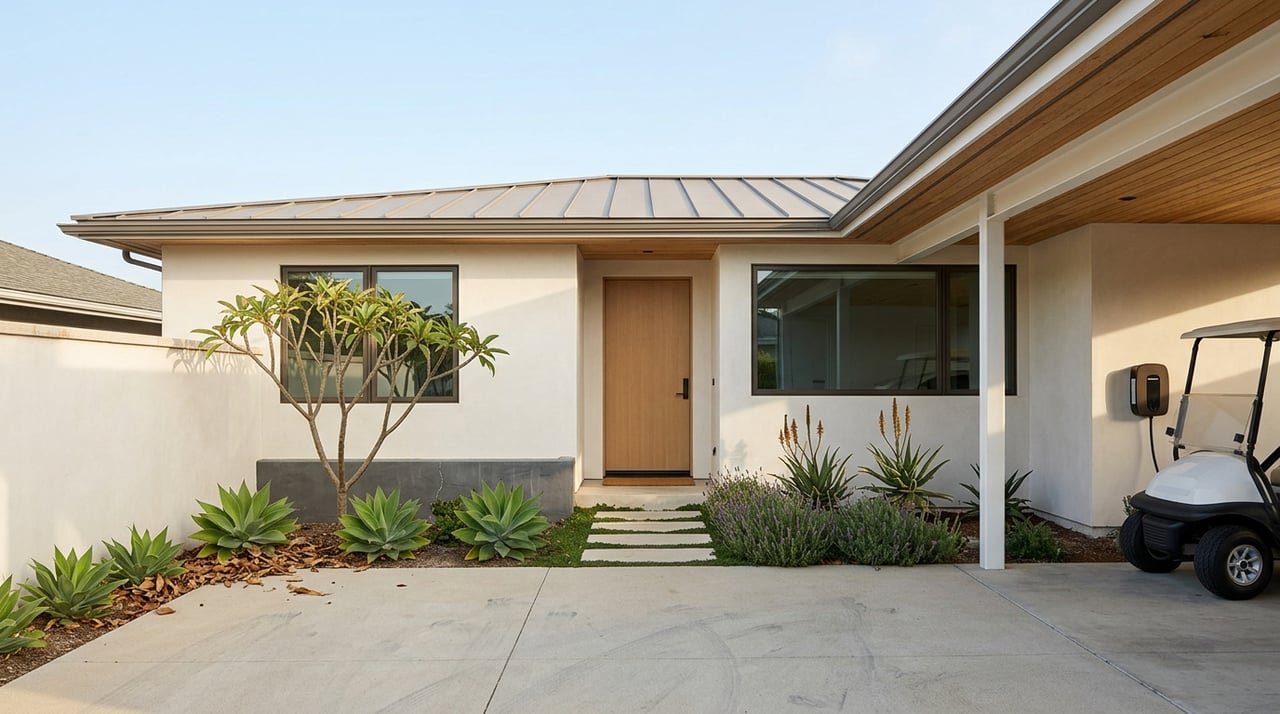
Golf carts are part of Coronado’s local culture, but they are best thought of as a short-trip convenience tool. City event programming includes a Christmas Golf Cart Parade, and the city has also used golf carts as shuttles for civic events. That pattern suggests they fit naturally into quick neighborhood movement and last-mile errands.
For some residents, that can be a real quality-of-life advantage. If your grocery stop, dinner plans, or visit to a civic destination is nearby, a golf cart may feel easier than moving a full-size vehicle. It is not a replacement for every transportation need, but it can be part of a very convenient mix.
Park-once living is real in parts of Coronado
Some of the easiest daily routines in Coronado happen near the island’s main service clusters. The city lists City Hall at 1825 Strand Way, the Community Center at 1845 Strand Way, the Spreckels Center at 1019 Seventh Street, and the Library at 640 Orange Avenue. Planning materials also identify the Orange Avenue corridor between First Street and Adella Avenue as a central commercial and civic area.
That concentration matters more than many buyers expect. In and around the Village and nearby blocks, you may be able to handle errands, civic stops, recreation, and dining in one outing without re-parking between each stop. For the right buyer, that kind of park-once pattern can feel more valuable than shaving a few minutes off a longer drive.
Parking should be part of your home search
Parking is a practical issue in Coronado, especially for second-home buyers and households that host guests. The city’s parking system includes free resident decals in some areas, up to three visitor placards, and restrictions on oversized vehicles and detached trailers. Those rules are worth reviewing as you compare properties.
In other words, convenience is not only about getting around. It is also about where your car goes when you get home and how easy it is for guests to visit. Driveway space, garage function, and guest-parking strategy can all affect how effortless a property feels over time.
Best fit by buyer type
For downtown commuters
If you work in Downtown San Diego, your best setup may depend on whether you prefer to drive, ride transit, or use the ferry. Ferry Landing access can be especially helpful if you want an alternative to bridge traffic. Route 901 may also matter if your routine lines up with its downtown connection.
For military-connected households
If your daily pattern involves NASNI or Naval Base Coronado, Route 901 deserves a close look because it connects key military and downtown points. You may also want to think carefully about how often you need to cross the bridge versus staying mostly on the island. A home that simplifies those recurring trips can save time and stress.
For second-home owners
If you will not be in residence full time, low-friction logistics often matter more than expected. Parking rules, guest access, and proximity to ferry service or Orange Avenue destinations can make a property much easier to enjoy. In many cases, the simplest second-home experience comes from a location that supports easy short trips once you arrive.
For households focused on daily errands
If your top priority is everyday ease, look closely at homes near the Village, Orange Avenue services, civic destinations, and other practical nodes. Walkability to the places you actually use often matters more than broad claims about convenience. In Coronado, a well-placed home can reduce the number of separate car trips you make in a week.
What to prioritize before you buy
The smartest way to evaluate convenience in Coronado is to match the property to your real routine. Before you narrow your search, consider these questions:
- How many days a week will you need off-island access?
- Would ferry access improve your commute or flexibility?
- Do you want to walk or bike for errands and short trips?
- Will transit routes like 901 or 904 be useful to your household?
- Do you need easy guest parking or room for multiple vehicles?
- Would a park-once location make daily life simpler?
Those answers can help you focus on the part of Coronado that fits your life best. In a market like this, convenience is highly personal, and the right fit is often more nuanced than it first appears.
If you want help weighing bridge access, ferry convenience, walkability, parking, and day-to-day livability in Coronado, The Clements Group can help you narrow your search with local insight and a concierge-level approach.
FAQs
How do most people get between Coronado and San Diego?
- The primary route is the San Diego–Coronado Bay Bridge, which Caltrans says carries about 70,000 vehicles a day.
Can you walk or bike across the Coronado Bridge?
- No. Caltrans says the bridge is not designed for pedestrians or bicyclists.
Is Coronado good for walking and biking for daily errands?
- Yes, many short trips can be handled that way, and the city’s Active Transportation Plan plus the local biking network support that pattern.
What transit routes serve Coronado in 92118?
- MTS Route 901 and Route 904 serve key island destinations, including Ferry Landing, Hotel del Coronado, City Hall, and connections to Downtown San Diego.
Does Coronado have ferry service to downtown San Diego?
- Yes. Coronado has commuter ferry service for weekday morning trips, and regular ferry service connects Coronado with Broadway Pier and the Convention Center.
Why does parking matter when buying a home in Coronado?
- The city uses resident decals, visitor placards, and certain vehicle restrictions, so on-site parking and guest access can have a real impact on convenience.